Find out how much a business website costs in India in 2026. Compare website pricing, development options, hosting costs, essential features, and budgeting tips.
How Much Does a Business Website Cost? A Complete Pricing Guide
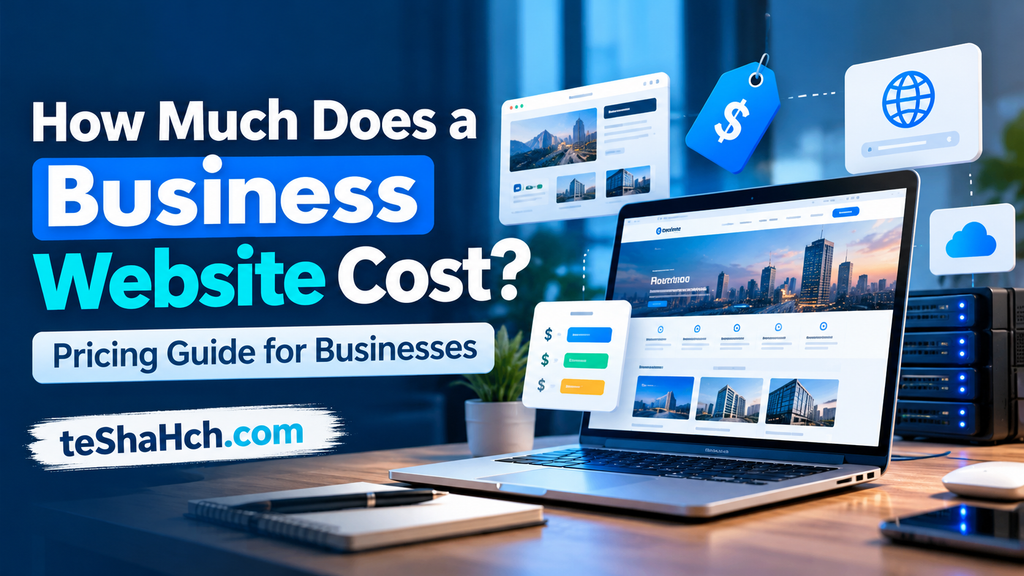
If you are planning to build a website for your business, one of your first questions is probably: How much does a business website cost?
The answer depends on what you need. A simple website with a few pages costs much less than a custom business website with advanced features, booking systems, customer accounts, or e-commerce functionality.
In India, a basic business website may cost around ₹10,000–₹25,000, while a more customised website can cost ₹25,000–₹60,000 or more. Larger websites with advanced features can require a significantly higher budget.
However, the initial development cost is only one part of the total investment. You may also need to pay for a domain name, hosting, website maintenance, content creation, and additional features.
In this guide, you will learn about typical business website costs in India, the factors that affect pricing, the features to consider, and how to choose the right website development solution for your business.
How Much Does a Business Website Cost in India?
The cost of a business website depends on its size, design, functionality, development method, and ongoing support requirements.
The following table provides indicative 2026 price ranges for planning a website project in India.
| Website Type | Estimated Development Cost |
|---|---|
| Basic landing page | ₹5,000–₹20,000 |
| Basic business website | ₹10,000–₹25,000 |
| Custom small business website | ₹25,000–₹60,000 |
| Growth-focused business website | ₹50,000–₹1,50,000 |
| E-commerce website | ₹35,000–₹1,00,000+ |
| Advanced custom website or web platform | ₹1,50,000–₹5,00,000+ |
These are indicative estimates, not fixed market rates or a quotation from teShaHch.com. Actual costs vary by developer, project scope, technology, location, and the features included. Advanced e-commerce websites and complex platforms can cost considerably more.
1. Basic Landing Page: ₹5,000–₹20,000
A landing page is a single web page designed to communicate a specific offer or encourage visitors to take an action.
It may include:
- A headline and business introduction
- Information about a product or service
- Key benefits
- Contact details
- A contact form or enquiry button
- A call to action
A landing page can work well for a new business, a specific service, a product launch, or a marketing campaign.
However, a single landing page may not provide enough space for a business that needs several service pages, company information, case studies, and detailed customer support information.
2. Basic Business Website: ₹10,000–₹25,000
A basic business website is suitable for businesses that need a professional online presence without complex functionality.
It may contain five to ten pages, depending on the package and project requirements.
Common pages include:
- Home
- About Us
- Services
- Contact Us
- Frequently Asked Questions
- Privacy Policy
Some projects may also include a gallery, testimonials, a WhatsApp contact option, or a Google Maps integration.
This type of website can be suitable for local businesses, consultants, service providers, and small companies that primarily want customers to discover their business and contact them.
The final price depends on whether the developer uses a template, customises an existing design, or creates a more individual design.
3. Custom Small Business Website: ₹25,000–₹60,000
A custom small business website is designed around the company’s branding, services, target audience, and business goals.
Depending on the scope, it may include:
- A customised website design
- Multiple service pages
- Mobile-responsive layouts
- Contact and enquiry forms
- WhatsApp and map integration
- Basic technical SEO setup
- Analytics integration
- A content management system
- Speed and usability optimisation
This option can be useful for businesses that want more control over their online presentation and need their website to support customer enquiries.
The phrase “custom website” does not always mean that every component is programmed from scratch. A developer may customise a suitable content management system or build selected components specifically for the project.
Always confirm what customisation means in the development proposal.
4. Growth-Focused Business Website: ₹50,000–₹1,50,000
Some businesses need more than a digital business card. They want a website that supports marketing, lead generation, and ongoing content growth.
A growth-focused website may include:
- More detailed service pages
- Landing pages for specific audiences
- A blog or resource section
- Conversion-focused page layouts
- Lead capture forms
- CRM or third-party integrations
- Analytics and conversion tracking
- Technical SEO improvements
- Performance optimisation
- Additional security and maintenance arrangements
The cost depends on how many features are required and how much planning, design, content preparation, and integration work is involved.
For businesses that expect to expand their services or publish content regularly, it is worth considering future requirements before choosing a website package.
5. E-commerce Website: ₹35,000–₹1,00,000+
An e-commerce website allows a business to sell products online.
Its cost depends on the number of products, product variations, payment methods, shipping requirements, inventory management, and checkout functionality.
Typical features include:
- Product categories and product pages
- Shopping cart
- Checkout system
- Payment gateway integration
- Order management
- Inventory management
- Shipping configuration
- Customer accounts
- Order notifications
A simple online store may fit within the range above. A larger store with custom checkout, complex inventory rules, multiple integrations, or advanced business workflows may cost several lakhs.
For more details about the business benefits of online selling, read our guide on Why Every Small Business Needs an Ecommerce Website.
6. Advanced Custom Website or Web Platform: ₹1,50,000–₹5,00,000+
Some projects require functionality beyond a standard business website.
Examples include:
- Customer or employee portals
- Online booking platforms
- Membership websites
- Custom dashboards
- Complex search and filtering systems
- Third-party API integrations
- Multiple user roles and permissions
- Business workflow automation
These projects require additional planning, development, testing, and ongoing technical support.
The final cost can exceed ₹5,00,000 when the project involves complex integrations, substantial custom functionality, or enterprise-level requirements.
If your business needs sophisticated workflows or application-like functionality, discuss the requirements with a development team before deciding whether a conventional website is sufficient.
What Factors Affect Business Website Development Cost?
Two developers may quote very different prices for what appears to be the same website. This usually happens because their proposals include different amounts of work.
Here are the most important factors that affect website development pricing.
1. Number of Pages
A five-page website generally requires less content preparation, design work, and testing than a website containing dozens of pages.
However, page count is not the only factor. A single page with complex functionality can require more development work than several simple information pages.
Before requesting a quotation, prepare a list of the pages your business actually needs.
2. Website Design and Customisation
The design approach affects both the initial cost and the amount of flexibility available.
A template-based website can be a practical option for a business with a limited budget and straightforward requirements.
A more customised design may require additional work on layouts, visual elements, user journeys, responsive behaviour, and brand consistency.
Choose the approach according to your business requirements rather than assuming that the most expensive design is always the best option.
3. Website Features and Functionality
Every additional feature may increase the development effort.
For example, a basic contact form is relatively straightforward. A booking system with availability rules, automated notifications, customer accounts, and payment processing is much more complex.
Before adding features, ask whether each one solves a genuine customer problem or supports a business objective.
4. Content Creation
A website needs useful content to explain what a business offers and why customers should choose it.
Content-related costs may include:
- Website copywriting
- Service descriptions
- Product descriptions
- Photography and image preparation
- Case studies
- Frequently asked questions
- Search-focused landing pages
Some development packages include a limited amount of content preparation, while others require the client to supply all text and images.
Confirm these details before signing an agreement.
5. SEO and Performance Requirements
A business website should be built so that search engines can discover and understand its pages and visitors can use it comfortably.
Depending on the project, SEO and performance work may include:
- Descriptive page titles and meta descriptions
- Logical URL structures
- Search-engine crawlability
- Mobile-responsive layouts
- Image optimisation
- XML sitemap configuration
- Appropriate internal linking
- Performance testing
- Analytics setup
Basic technical SEO may be included in a website package, but ongoing content production, competitive SEO campaigns, and link-building are usually separate activities unless specifically included.
For a better understanding of website infrastructure, read our guide to CDN in Website Development.
6. Technology and Content Management
The technology used to build a website can affect the initial investment, maintenance requirements, and future flexibility.
For example, a content management system may allow business owners to update text, images, and blog posts without changing the underlying code.
A fully custom implementation may be appropriate when the project requires specialised functionality or a particular technical architecture.
The right choice depends on the website’s purpose, expected growth, available budget, and long-term maintenance plan.
7. Integrations With Other Services
Your website may need to connect with external tools or services.
Examples include:
- Payment gateways
- Customer relationship management systems
- Booking software
- Email marketing platforms
- Analytics tools
- Inventory systems
- External APIs
Some integrations are straightforward, while others require custom development, additional subscriptions, or ongoing maintenance.
Ask whether integration costs and third-party fees are included in the quotation.
What Are the Ongoing Costs of Owning a Business Website?
The initial development price does not necessarily cover every expense after launch.
A realistic website budget should include recurring costs as well as the initial build.
| Expense | What to Consider |
|---|---|
| Domain name | Annual registration and renewal |
| Web hosting | Server resources, storage, traffic, and support |
| SSL certificate | HTTPS protection; often included or available without a separate charge |
| Website maintenance | Updates, backups, security checks, and technical fixes |
| Premium themes or plugins | Licence fees and renewal conditions |
| Content updates | New pages, service changes, and blog content |
| SEO services | Ongoing search optimisation and content strategy |
| Email services | Business email accounts and associated subscriptions |
The actual amount depends on the domain extension, hosting plan, technology, number of licences, support agreement, and frequency of updates.
Before choosing a hosting plan, read our guide to Software Hosting Platforms: Beginner’s Guide.
You can also learn about domain registration and selection in our articles:
Important: Ask for a breakdown of the first-year cost and the expected annual renewal cost. A low initial package price may not include hosting, premium licences, ongoing maintenance, or future changes.
How Much Does a Website Domain and Hosting Cost?
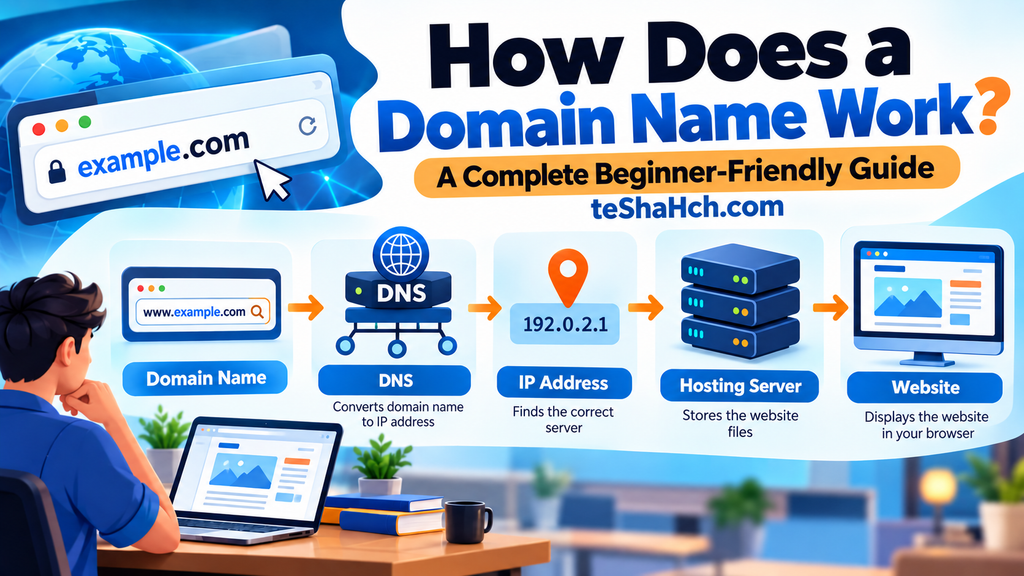
A domain name is the address visitors use to access your website. Hosting is the service that stores and delivers your website’s files and data.
Their costs depend on the provider, domain extension, hosting type, and plan.
Domain Name Cost
Domain registration prices vary by extension and provider. Renewal prices can also differ from introductory offers.
Before purchasing a domain, check:
- The registration price
- The annual renewal price
- Whether domain privacy is included or available
- Who will own and control the domain
- Whether you can transfer it to another provider
Whenever possible, register the domain in your business’s own account and retain administrative access.
Web Hosting Cost
Hosting requirements depend on the website’s size, traffic, technology, and functionality.
A simple informational website may operate comfortably on an entry-level hosting plan. A larger e-commerce website or application may need more resources, stronger performance, and specialised support.
Compare hosting plans based on performance, security, backups, support, scalability, and renewal costs—not just the introductory price.
How to Choose the Right Website Development Package
The cheapest package is not automatically the best value, and the most expensive package is not necessarily the right choice.
Start by identifying what your business needs the website to accomplish.
Step 1: Define Your Business Goal
Do you want to generate enquiries, sell products, display a portfolio, receive bookings, or provide customer information?
Your primary goal will influence the pages, features, and integrations you need.
Step 2: Prepare a Page and Feature List
List the essential pages and functionality before requesting quotations.
For example, a service business may need Home, About, Services, individual service pages, FAQs, and Contact.
A school may need additional information about admissions, facilities, activities, and notices. Our guide to Must-Have Features for a School Website explains some of these requirements.
Step 3: Compare Complete Quotations
Ask each developer to specify:
- The number of pages included
- The design approach
- Included features
- Content preparation responsibilities
- Domain and hosting arrangements
- Basic SEO setup
- Testing and launch support
- Maintenance and support terms
- Additional charges for future changes
Comparing itemised quotations is more useful than comparing headline prices alone.
Step 4: Check Ownership and Access
Make sure your business will have the necessary access to the domain, hosting, website administration, and relevant accounts.
Clarify whether the agreement includes source code or design files where applicable, and whether any third-party licences impose restrictions.
Step 5: Plan for Future Growth
Consider whether you may need additional service pages, a blog, online payments, booking features, or integrations later.
You do not need to pay for every possible feature from the beginning. However, the initial architecture should be suitable for your realistic growth plans.
Should You Build a Website Yourself or Hire a Developer?
Both approaches can work, depending on your skills, time, and requirements.
| Factor | DIY Website Builder | Professional Developer |
|---|---|---|
| Initial cost | Often lower | Usually higher |
| Setup | You manage much of it | Development team handles agreed work |
| Design flexibility | Depends on the platform | Depends on the project and technology |
| Custom functionality | May be limited or require add-ons | Can be developed around requirements |
| Time commitment | Requires your own time | Work is delegated under an agreement |
| Technical maintenance | You may manage it yourself | Support may be available through a service agreement |
A website builder can be suitable for a simple website when you are comfortable managing the setup yourself.
Hiring a developer may be more appropriate when your business needs customised functionality, professional implementation, integrations, or help managing technical requirements.
The best decision depends on the value of your time, the complexity of the project, and your long-term plans.
Is a Cheap Business Website Worth It?
A low-cost website can be a sensible starting point if it meets your business needs and its limitations are clear.
However, a cheap package may become expensive if important requirements are excluded or the website later needs substantial rework.
Before accepting a low quotation, check whether it includes:
- A mobile-responsive design
- The pages your business needs
- A working contact form
- Basic security configuration
- Suitable hosting arrangements
- Access to your domain and website
- A clear maintenance and support policy
Do not pay for unnecessary features simply to make the website appear more advanced. Instead, prioritise functionality that helps customers understand your services, trust your business, and contact you.
What Should You Ask Before Hiring a Website Developer?
Before committing to a website development project, ask these questions:
- What exactly is included in the quoted price?
- How many pages and features will be delivered?
- Who will provide the website content and images?
- Will the website work properly on mobile devices?
- What technical SEO setup is included?
- Who will own the domain and control the hosting account?
- Are premium themes, plugins, or third-party services included?
- How will website maintenance and security updates be handled?
- What happens if I need additional pages or features?
- What support is available after the website launches?
A clear agreement helps prevent misunderstandings and makes it easier to compare different development proposals.
Get a Business Website That Fits Your Requirements
The right website is not necessarily the one with the lowest price or the largest number of features. It is the one that meets your business requirements, fits your budget, and gives you a practical foundation for future growth.
Before starting development, define your business goals, list the features you need, and understand the full cost of building and maintaining the website.
If you are planning a new business website or want to improve your existing online presence, teShaHch.com can be your next point of contact for discussing your website development requirements.
Prepare a short project brief containing your business type, required pages, desired features, and approximate budget. This will make it easier to evaluate the scope and determine an appropriate development approach.
Frequently Asked Questions (FAQ)
1. How much does a business website cost in India in 2026?
A basic business website may cost approximately ₹10,000–₹25,000, while a customised small business website may cost ₹25,000–₹60,000. Websites with advanced features, e-commerce functionality, or complex integrations can cost considerably more.
2. What is the average cost of a small business website?
There is no single fixed average because website requirements vary. As a preliminary budget, ₹25,000–₹60,000 may be a useful range to investigate for a customised small business website, subject to the scope and quotation.
3. How much does a five-page business website cost?
A five-page business website may fit within a basic website package, but the price depends on the design, content, features, and technology. A template-based website may cost less than a custom-designed project with integrations.
4. Does a business website require a monthly payment?
Not always. Some developers charge a one-time development fee, while hosting, domain renewal, maintenance, and third-party services may involve recurring payments. Subscription-based website services may charge a monthly fee for the overall package.
5. Is domain registration included in website development costs?
It depends on the development package. Ask whether the domain registration fee is included, who owns the domain, and what the renewal cost will be.
6. How much does website hosting cost?
Hosting costs vary according to the provider, plan, website requirements, and renewal terms. A small informational website may need fewer resources than an e-commerce store or a high-traffic website. Compare the complete annual cost before choosing a plan.
7. Is SEO included in website development?
Some developers include basic technical SEO setup, such as page titles, meta descriptions, crawlability, and sitemap configuration. Ongoing SEO services, content creation, and competitive keyword campaigns may cost extra.
8. How long does it take to develop a business website?
A simple website may take a few days to a few weeks, depending on the scope and the availability of content. More complex websites can require several weeks or months. The timeline also depends on feedback, revisions, integrations, and testing.
9. Can I update my website after it is launched?
Yes, provided the website and its content management arrangements support the required changes. Confirm whether you can edit text, images, services, and blog posts yourself or whether updates require developer assistance.
10. How do I choose the right website development company?
Compare relevant experience, project scope, communication, technical approach, ownership arrangements, maintenance terms, and complete pricing. Ask for an itemised proposal so that you can compare what each provider will actually deliver.