Learn what software hosting platforms are, how they work, why developers use them, and the key features to look for. A beginner-friendly guide to software hosting, Git repositories, and code collaboration.
What Are Software Hosting Platforms? A Complete Beginner’s Guide
Modern software development involves much more than simply writing code. Developers need a secure and organized place to store source code, collaborate with teammates, track changes, manage bugs, and release new versions of their applications.
This is where software hosting platforms come into play.
Whether you’re learning programming, contributing to open-source projects, or building commercial software, understanding software hosting platforms is an essential skill.
In this guide, you’ll learn what software hosting platforms are, how they work, their benefits, important features, and why they have become a fundamental part of modern software development.
🚀 What Is a Software Hosting Platform?
A software hosting platform is an online service that allows developers to store, manage, share, and collaborate on software projects.
These platforms act as a central hub where developers can:
✅ Store source code
✅ Manage project versions
✅ Collaborate with team members
✅ Track bugs and issues
✅ Review code changes
✅ Automate testing and deployment
✅ Release software updates
Instead of storing project files only on a local computer, developers use software hosting platforms to keep projects secure, organized, and accessible from anywhere.
💡 Why Do Developers Need Software Hosting Platforms?
Without a software hosting platform, managing software projects can quickly become difficult.
Imagine a team of developers working on the same application.
Problems may include:
❌ Overwriting each other’s code
❌ Losing important files
❌ Difficulty tracking changes
❌ Confusion about project versions
❌ Poor collaboration
Software hosting platforms solve these challenges by providing tools that help teams work together efficiently.
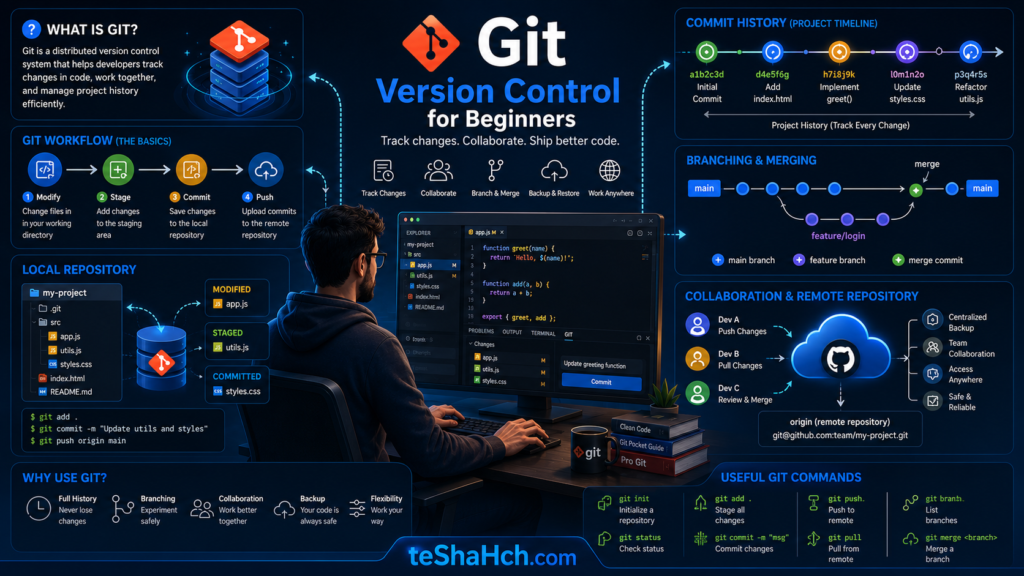
🔄 Understanding Version Control
One of the most important concepts behind software hosting platforms is Version Control.
Version control systems keep track of every change made to a project.
This allows developers to:
✔ View project history
✔ Restore previous versions
✔ Identify who made specific changes
✔ Collaborate safely
✔ Experiment without breaking production code
Git is currently the most popular version control system used by software hosting platforms worldwide.
📂 What Is a Repository?
A repository, often called a “repo,” is the storage location for a software project.
A repository typically contains:
📁 Source code
📁 Documentation
📁 Configuration files
📁 Images and assets
📁 Project history
Think of a repository as the project’s digital home.
Every change made to the project is stored and tracked inside the repository.
🤝 How Software Hosting Platforms Help Teams Collaborate
Collaboration is one of the biggest advantages of modern software hosting platforms.
Team members can:
👨💻 Work on different features simultaneously
👨💻 Review each other’s code
👨💻 Discuss improvements
👨💻 Report bugs
👨💻 Suggest new features
This makes software development faster, safer, and more organized.
⚙️ Common Features of Software Hosting Platforms
Most software hosting platforms offer a similar set of core features.
📌 Source Code Hosting
Provides a secure location for storing project files and source code.
📌 Version Control Integration
Tracks every change made to the project over time.
📌 Branch Management
Developers can create separate branches for new features, testing, or bug fixes.
📌 Pull Requests and Merge Requests
Allow developers to review and approve code changes before merging them into the main project.
📌 Issue Tracking
Helps teams track bugs, tasks, improvements, and feature requests.
📌 Team Collaboration Tools
Supports discussions, comments, reviews, and project planning.
📌 CI/CD Automation
Many modern platforms support Continuous Integration and Continuous Deployment.
These tools automatically:
✅ Test code
✅ Build applications
✅ Deploy software updates
🌎 Types of Software Hosting Platforms
Software hosting platforms generally fall into several categories.
Open-Source Hosting Platforms
Designed for public collaboration and community-driven development.
Examples include:
- GitHub
- GitLab
- SourceForge
Enterprise Hosting Platforms
Built for private teams and business environments.
Features often include:
- Advanced security
- Access control
- Compliance management
- Team administration
Specialized Hosting Platforms
Some platforms focus on specific ecosystems such as:
- Linux distributions
- GNU projects
- Research software
- Educational projects
🎯 Benefits of Using Software Hosting Platforms
Using a software hosting platform offers many advantages.
✅ Better Collaboration
Multiple developers can work on the same project efficiently.
✅ Improved Security
Projects are backed up and protected against accidental data loss.
✅ Version Tracking
Every change is recorded and can be reviewed later.
✅ Faster Development
Automation tools help teams release software more quickly.
✅ Project Transparency
Everyone involved can see project progress and updates.
✅ Remote Work Support
Developers can collaborate from anywhere in the world.
🔍 What Should Beginners Look for in a Software Hosting Platform?
If you’re new to software development, consider these factors:
✔ Ease of use
✔ Free plan availability
✔ Learning resources
✔ Community support
✔ Collaboration tools
✔ Integration with Git
✔ Documentation quality
Choosing a beginner-friendly platform can significantly reduce the learning curve.
🏆 Popular Software Hosting Platforms
Several software hosting platforms are widely used by developers worldwide.
Some of the most well-known options include:
⭐ GitHub
⭐ GitLab
⭐ Bitbucket
⭐ SourceForge
⭐ Launchpad
⭐ Savannah
Each platform offers different strengths, features, and use cases.
A detailed comparison of these platforms can help developers choose the most suitable option for their projects.

Software hosting platforms have become the foundation of modern software development.
They provide developers with tools for storing code, tracking changes, collaborating with teams, managing projects, and automating workflows.
Whether you’re a beginner learning Git or an experienced developer managing large applications, understanding software hosting platforms is an important step toward becoming a more effective software professional.
By learning the basics of repositories, version control, collaboration, and project management, you’ll be better prepared to choose the right platform for your development journey.
Frequently Asked Questions (FAQ)
What is a software hosting platform?
A software hosting platform is an online service that stores source code and provides tools for collaboration, version control, project management, and software deployment.
Why are software hosting platforms important?
They help developers manage code efficiently, collaborate with teams, track project history, and automate development workflows.
What is a repository?
A repository is a storage location where a software project’s source code, files, and version history are maintained.
What is version control?
Version control is a system that tracks changes made to software projects, allowing developers to review, restore, and manage previous versions.
Is Git a software hosting platform?
No. Git is a version control system. Software hosting platforms use Git to manage repositories and project history.
Which software hosting platform is best for beginners?
Many beginners start with GitHub because of its user-friendly interface, large community, and extensive learning resources.