Learn what Instagram marketing is, why it matters for businesses, and how to use Instagram to increase brand awareness, engagement, leads, and sales. Complete beginner-friendly guide.
What Is Instagram Marketing? The Complete Beginner’s Guide for Businesses
Instagram is no longer just a photo-sharing app.
Today, it is one of the most powerful digital marketing platforms in the world.
Millions of businesses use Instagram every day to:
✅ Build brand awareness
✅ Reach potential customers
✅ Generate leads
✅ Increase website traffic
✅ Boost sales
✅ Create customer relationships
Whether you run a small local business, an online store, a startup, or a large company, Instagram can become a powerful growth engine when used correctly.
In this guide, you’ll learn:
✅ What Instagram marketing is
✅ Why businesses use Instagram
✅ Benefits of Instagram marketing
✅ Types of Instagram content
✅ How Instagram marketing works
✅ Strategies for business growth
✅ Common mistakes to avoid
Let’s get started.
What Is Instagram Marketing?
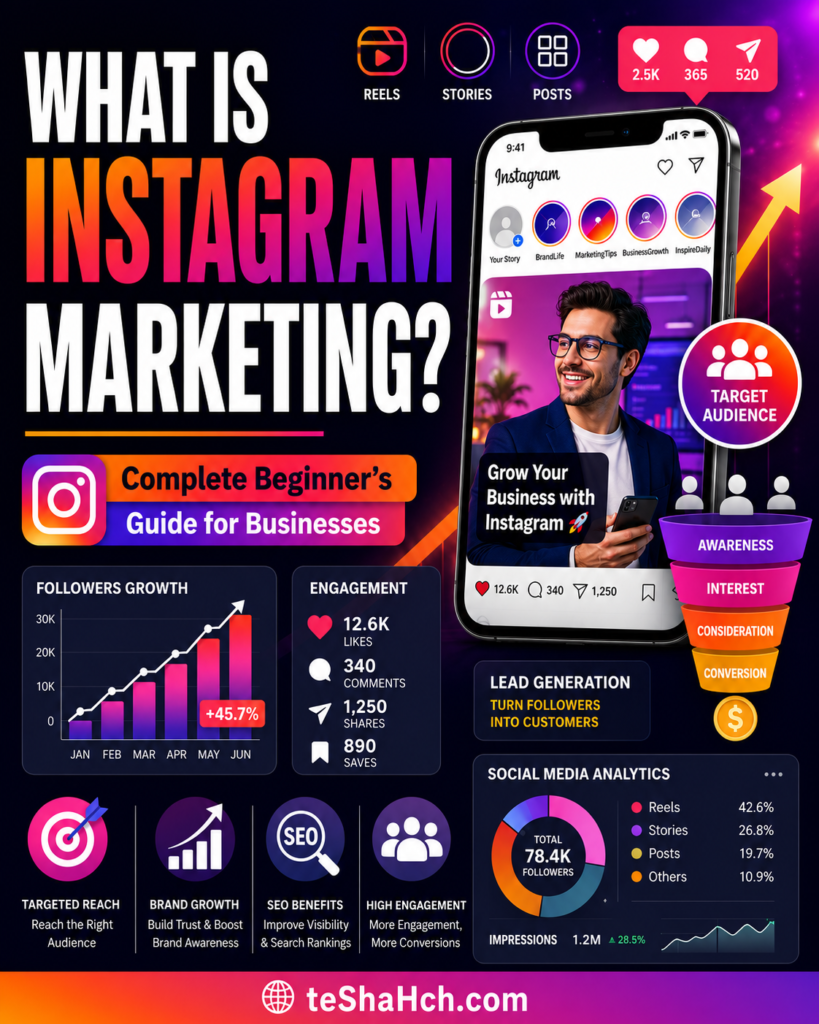
Instagram marketing is the process of using Instagram to promote a business, product, service, or personal brand.
The goal is usually to:
- Increase visibility
- Build trust
- Grow an audience
- Generate leads
- Drive sales
Businesses use various Instagram features such as:
- Posts
- Reels
- Stories
- Carousels
- Live Videos
- Direct Messages
- Instagram Ads
to connect with their target audience.
Simply put:
Instagram Marketing = Using Instagram strategically to attract, engage, and convert potential customers.
Why Is Instagram Marketing Important?
Consumer behavior has changed dramatically.
Before buying a product or service, many people now check:
- Instagram profiles
- Customer reviews
- Content quality
- Brand credibility
A strong Instagram presence can influence purchasing decisions.
For many businesses, Instagram acts as:
🏢 A digital storefront
📱 A communication channel
🎯 A lead generation platform
💰 A sales tool
Key Benefits of Instagram Marketing
1. Massive Audience Reach
Instagram has billions of users worldwide.
This gives businesses access to enormous audiences across different industries and demographics.
Whether you sell:
- Clothing
- Electronics
- Courses
- Consulting services
- Food
- Software
Instagram offers growth opportunities.
2. Strong Brand Awareness
People buy from brands they recognize and trust.
Instagram helps businesses:
- Stay visible
- Build recognition
- Create authority
Consistent content gradually strengthens brand awareness.
3. Higher Customer Engagement
Unlike traditional advertising, Instagram encourages interaction.
Users can:
- Like
- Comment
- Share
- Save
- Send messages
This creates stronger relationships between businesses and customers.
4. Lead Generation Opportunities
Instagram can become a powerful lead generation channel.
Businesses often generate inquiries through:
- Direct Messages
- Contact buttons
- Link-in-bio pages
- Landing pages
5. Increased Sales
Many customers discover products directly through Instagram.
Quality content often influences purchase decisions before customers even visit a website.
How Instagram Marketing Works
Instagram’s algorithm tries to show users content they are most likely to enjoy.
The platform evaluates:
- Watch time
- Engagement
- Shares
- Saves
- Comments
- User behavior
The better your content performs, the more visibility it receives.
This creates a cycle:
Great Content → Engagement → Reach → Followers → Leads → Sales
Types of Instagram Content
Successful businesses use multiple content formats.
Instagram Posts
Traditional feed posts remain useful for:
- Announcements
- Branding
- Product showcases
- Educational content
Instagram Reels
Reels currently offer the highest organic reach potential.
Benefits:
✅ More visibility
✅ Better discoverability
✅ Higher engagement
Instagram Stories
Stories are excellent for:
- Daily updates
- Polls
- Questions
- Behind-the-scenes content
They help maintain audience relationships.
Carousel Posts
Carousels work especially well for:
- Tutorials
- Checklists
- Guides
- Educational content
These often receive high save rates.
Instagram Live
Live videos help businesses:
- Build trust
- Answer questions
- Demonstrate expertise
Instagram Marketing for Small Businesses
One of Instagram’s biggest advantages is accessibility.
Small businesses can compete with larger brands by creating valuable content.
Examples include:
- Restaurants
- Cafes
- Coaching businesses
- Freelancers
- Local stores
- Educational institutes
A strong content strategy often matters more than a large budget.
Organic Instagram Marketing vs Paid Instagram Marketing
Organic Marketing
Organic marketing refers to unpaid growth.
Examples:
- Reels
- Posts
- Stories
- Community engagement
Advantages:
✅ Long-term growth
✅ Higher trust
✅ Lower cost
Paid Marketing
Paid marketing involves advertising.
Examples:
- Instagram Ads
- Sponsored content
- Lead generation campaigns
Advantages:
✅ Faster reach
✅ Targeted audiences
✅ Quick results
The best businesses often combine both approaches.
Common Instagram Marketing Mistakes
Many businesses struggle because of avoidable mistakes.
Mistake #1: Posting Without a Strategy
Random content rarely produces consistent results.
Every post should support a business objective.
Mistake #2: Selling Too Often
People don’t follow brands to see advertisements every day.
Focus on:
- Education
- Entertainment
- Inspiration
before promotion.
Mistake #3: Ignoring Reels
Reels remain one of the strongest growth tools on Instagram.
Businesses that ignore Reels often miss significant reach opportunities.
Mistake #4: Inconsistent Posting
Consistency builds audience trust and algorithm confidence.
Mistake #5: Ignoring Analytics
Data helps businesses identify:
- Winning content
- Audience preferences
- Growth opportunities
Proven Instagram Marketing Strategy for Businesses
Step 1: Define Your Audience
Understand:
- Who they are
- What they want
- What problems they face
Step 2: Create Valuable Content
Focus on:
- Tips
- Guides
- Tutorials
- Solutions
Value attracts attention.
Step 3: Maintain Consistency
Create a realistic publishing schedule.
Consistency often beats intensity.
Step 4: Engage with Your Audience
Reply to:
- Comments
- Messages
- Questions
Engagement strengthens relationships.
Step 5: Analyze Performance
Review:
- Reach
- Engagement
- Saves
- Shares
- Profile visits
Use insights to improve future content.
Future of Instagram Marketing
Instagram continues evolving.
Key trends include:
🚀 AI-driven recommendations
🚀 Search-based discovery
🚀 Short-form video dominance
🚀 Creator-commerce integration
🚀 Personalized content feeds
Businesses that adapt early often gain significant advantages.
Instagram marketing is no longer optional for many businesses.
It has become one of the most effective ways to:
✅ Build brand awareness
✅ Connect with customers
✅ Generate leads
✅ Increase sales
✅ Grow long-term business value
Success on Instagram does not come from luck.
It comes from understanding your audience, creating valuable content, and maintaining consistency.
Businesses that focus on providing value will continue to grow as Instagram evolves.
Frequently Asked Questions (FAQ)
What is Instagram marketing?
Instagram marketing is the use of Instagram to promote a business, brand, product, or service and attract potential customers.
Is Instagram marketing free?
Organic Instagram marketing is free, while paid advertising requires a budget.
Is Instagram marketing effective for small businesses?
Yes. Many small businesses successfully use Instagram to build brand awareness, generate leads, and increase sales.
What type of content performs best on Instagram?
Reels, educational content, tutorials, and valuable carousel posts often perform well.
How often should businesses post on Instagram?
Consistency is more important than frequency. A sustainable posting schedule usually works best.
Do I need Instagram Ads?
Not necessarily. Many businesses grow through organic marketing, though ads can accelerate results.
How long does Instagram marketing take to show results?
Results vary, but consistent effort over several months typically produces stronger long-term growth.
One response to “What Is Instagram Marketing? Complete Guide for Business Growth”
[…] What Is Instagram Marketing? Complete Guide for Business Growth […]